

Fabulous Florals Are Always in Season
At every time of year, we’ve been called on to bring environments to life with floral arrangements that surprise and delight event guests. Sometimes classic, sometimes outrageous, but always beautiful, these can range from tiny centerpieces to massive installations.
Since moving to our new headquarters, our botanical potential has really blossomed thanks to our dedicated floral department and walk-in (and in and in) cooler.
We sat down with WM Events Floral Manager Sara Gagnon to discuss how she incorporates seasonal blooms, greenery, and sometimes unconventional elements to design perfect arrangements for every event on any day of the year. Here are some of her perennial favorites, season by season.
Fall Into Florals
When the air cools and the leaves begin to change, Sara follows suit by leaning into shades of yellow, orange, and red. This could mean chrysanthemums in an array of rusty hues mixed with bright celosia in red, orange, or even pink. She might pair these with purple, blue, or white aster to add depth and contrast.
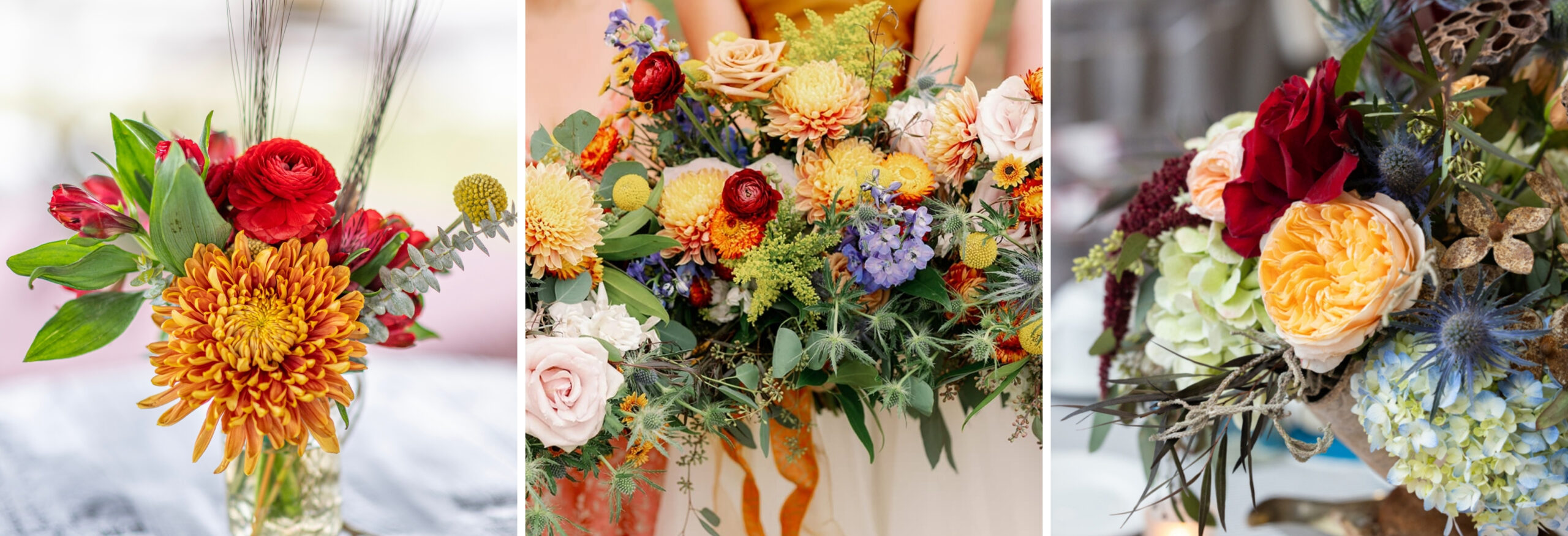
Other flowers feature a similar look and palette, like sedum, the rounded succulents with bright colors. Solidago, also known as goldenrod, makes a delightful filler with its tiny yellow flowers.
“During fall, certain plants are still blooming, but you can also harvest items to add extra elements and create the look of something gathered,” says Sara. “Think of a harvest of things that are left behind in multiple ways to create a cohesive look.”
Autumnal elements she uses to enhance arrangements include pheasant feathers for beautiful brown tones, oak and maple leaves in their fallen hues, cattails and dried wheat grasses, or hypericum berries to bring in shades of red-orange and green. To complete the look, she will scour the earth for lotus pods and pinecones, as well as gourds and pumpkins, which can even double as a nature-inspired vase when hollowed out.

Sara’s Gathered Harvest Arrangement
Focal flower: late summer sunflowers and celosia
Line: cattails and wheat stalks
Filler: solidago
Winter Wonderland
Even the coldest months offer all the ingredients necessary for spirted floral arrangements. To begin, Sara advises choosing hellebores, which bloom in winter and early spring. Often called Christmas roses or Lenten roses, they are not from the rose family at all but are a type of Ranunculaceae. Their white petals are tinged with shades of pink, and they may have yellow centers with a halo of green, making them one of her go-to fillers for winter florals.

Joining the hellebore, other blooms in shades of white, pink, and red make the ideal complement. Consider paperwhite narcissus; amaryllis bulbs in red, white or candy stripe; larkspurs and delphinium; and roses of all varieties. To complete this luscious bunch, you might feature hoary stock, available in white, mauve, and pink, to maintain the cheerful holiday palette.
“At this time of year, you can go really dramatic with flowers that are deep, deep purple and appear almost black,” says Sara. “I’m thinking of darker shades of dahlias, cosmos, chocolate cymbidium orchids, fiddlehead ferns, black baccarat roses, or a dark burgundy ranunculus.”
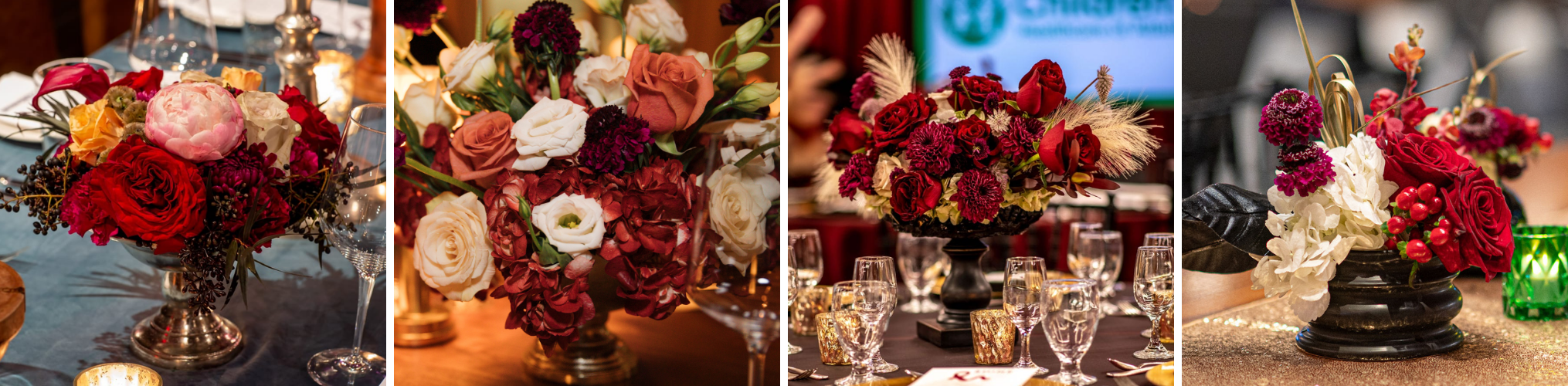
To intensify these cold weather designs, Sara chooses seasonal elements like red hypericum berries or winter foliage, such as pine, fir, and holly. Finally, you can rev up the drama with black prince succulents or agonis plants.
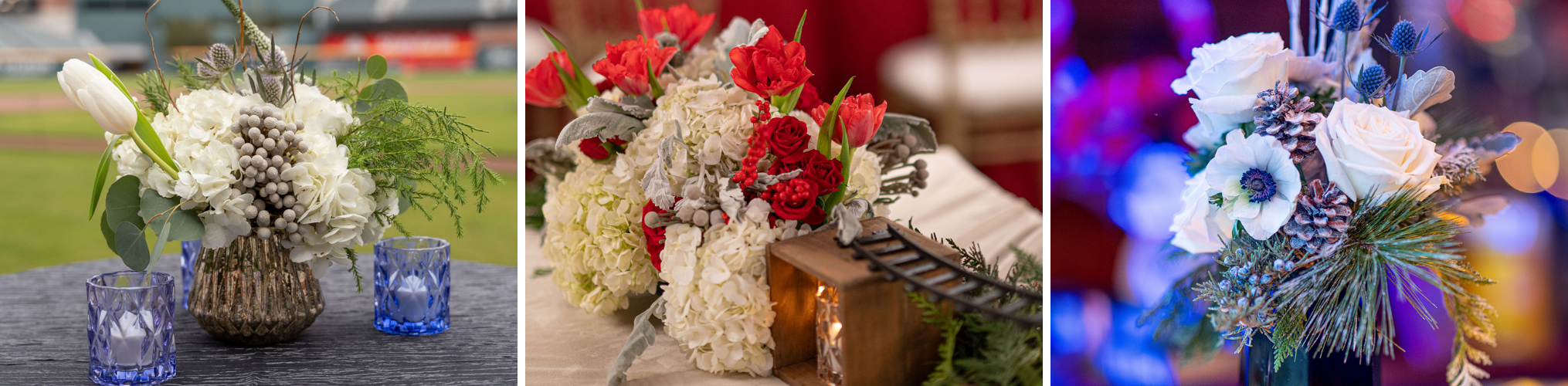
Sara’s Get Cozy Centerpiece
Focal flower: amaryllis
Line: curly willow stick
Filler: hellebore, winter greens (pine and cedar), and eucalyptus
Spring Forward
To celebrate the season of renewal, Sara reaches for vibrant colors that combine in a spectacular floral show. The first to flower during spring, daffodils announce nature’s renaissance with their bright yellow trumpets. Another quintessentially spring flower, tulips offer the full palette of color options to produce picture-perfect installations.
“It’s time for our senses to become overloaded,” says Sara. “We’re looking for vibrancy, fragrance and that sense of abundance that wakes you up to take part in the cycle of renewal.”

With these aims, she chooses from the lush petals of peonies, the showy layers of petals in ranunculus, the vibrant blues and purples of iris, and striking anemone with white petals and contrasting dark centers. To incorporate the scents of spring, Sara reaches for hyacinth, lilac, or freesia – each of which brings both beauty and fragrance.
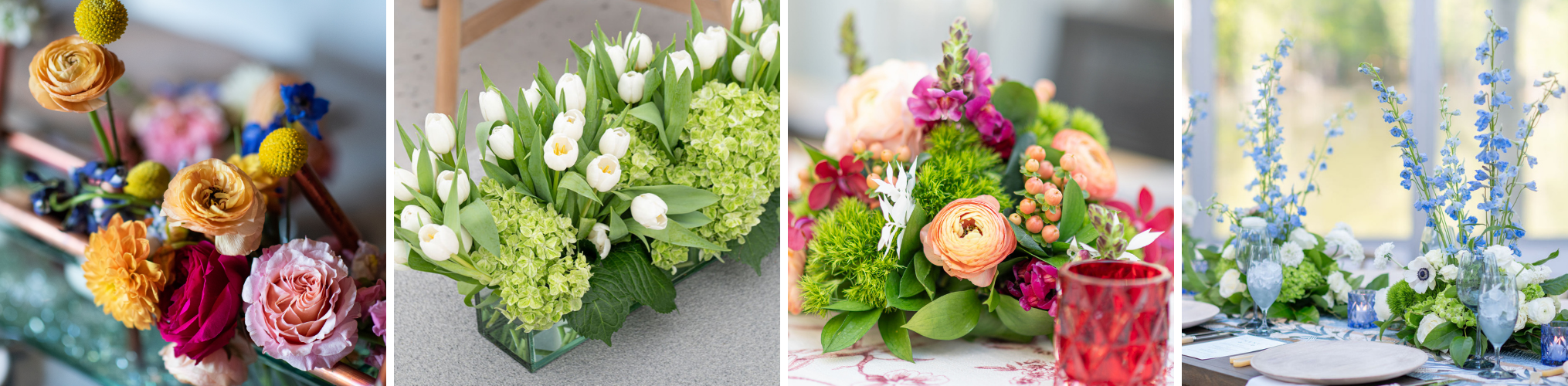
Sara’s Rite of Spring Bouquet
Focal flower: peonies
Line: snapdragon
Filler: caspia or gypsophilia (baby’s breath)
Plus … add some tulips for movement because they continue to grow after being cut. Daffodils and ranunculus are delightful additions. In spring, more is more!
Summer Solstice
When the sun is shining bright, it’s time for playful arrangements that are fun, bold, and maybe even a little sassy. Start with hearty and vibrant marigolds, whose orange and gold tones are perfectly complemented by the variety of colors available in zinnias. Next, think Gerber daisies to up the cheer, and add some tall and spiky gladiolas for personality.
“Summer is also a time for delicate flowers,” says Sara. “Adding delphinium with its dainty blooms in blue, purple, and white or soothing scented lavender will infuse a sense of fragility to an arrangement like taking a breath in the middle of a celebration.”

From bold to delicate, summer bouquets have many blossoms to choose from. Hollyhocks offer old-fashioned charm with their tall, dramatic stems. Phlox come in fragrant clusters of pink, white, and purple. Sweetpea have a soft scent and pastel shades, perfect for the season, and gorgeous lisianthus resemble roses with their tissue-paper petals but are long-lasting and elegant flowers.

Sara’s Midsummer Garland
Focal flower: marigolds and dahlias
Line: delphinium
Filler: Queen Anne’s lace
In any season, WM Events’ floral creations stun and amaze clients and their guests. Guided by Sara’s passion and extensive experience, our floral team brings our sky-high standards to every centerpiece, arrangement, and installation we design.